

Concrete structures are designed for decades of service, but exposure to moisture, aggressive environments, overloading, corrosion, and aging gradually reduces their structural performance. When deterioration begins, replacing the entire structure is rarely the most practical solution. Modern rehabilitation engineering focuses on restoring structural integrity while extending service life, and this is where the benefits of guniting become highly valuable.
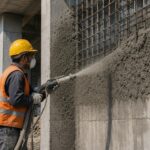
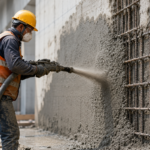
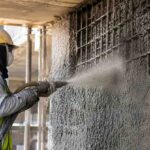
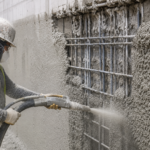
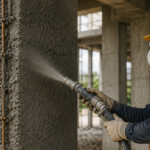
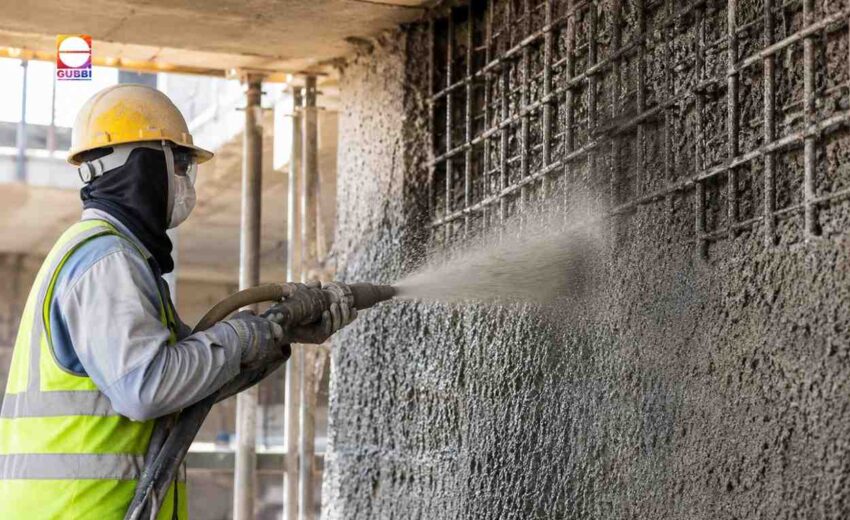
Professional guniting services provide a proven method for repairing damaged concrete, strengthening weakened RCC members, and improving durability with minimal disruption. By pneumatically applying high-strength mortar or concrete at high velocity, guniting creates a dense repair layer with excellent adhesion to the existing substrate, making it one of the preferred techniques for structural rehabilitation projects.
Whether the project involves industrial facilities, commercial buildings, bridges, retaining walls, tunnels, or water-retaining structures, properly executed guniting work offers long-term engineering performance that conventional patch repairs often cannot achieve.
Top Benefits of Guniting for Structural Strengthening
1. Restores Structural Capacity of Damaged RCC Members
One of the primary benefits of guniting is its ability to rebuild deteriorated concrete sections while restoring the structural performance of beams, columns, slabs, shear walls, and retaining structures.
High-velocity placement creates excellent interlocking with existing concrete, producing a repair layer capable of resisting structural loads more effectively than conventional hand-applied repair mortars.
This makes guniting an ideal solution for:
- RCC beams
- Columns
- Slabs
- Retaining walls
- Foundations
- Bridge components
2. Superior Bonding with Existing Concrete
Bond failure is one of the most common reasons conventional repairs deteriorate prematurely.
Professional guniting work achieves exceptional adhesion because the material impacts the prepared surface under high pressure, eliminating many of the voids commonly associated with manual repairs.
Superior bonding provides:
- Better load transfer
- Reduced delamination risk
- Improved durability
- Enhanced structural integrity
3. Increases Durability Against Harsh Environments
Concrete deterioration rarely stops once it begins.
Moisture, carbonation, chlorides, sulphates, freeze-thaw cycles, and industrial chemicals continue attacking weakened concrete.
One of the long-term benefits of guniting is the formation of a dense, low-permeability repair layer that helps reduce future deterioration by limiting the ingress of aggressive agents.
4. Improves Protection of Reinforcement Steel
Corrosion of reinforcement remains one of the leading causes of RCC distress.
During rehabilitation, deteriorated concrete is removed, corroded reinforcement is treated or supplemented where required, and guniting restores the protective concrete cover.
This process helps:
- Reduce future corrosion
- Improve concrete cover
- Restore member durability
- Increase structural lifespan
5. Minimal Additional Dead Load
Unlike conventional jacketing methods that may significantly increase structural weight, properly designed guniting services can strengthen damaged sections while adding comparatively less dead load.
This is particularly beneficial for rehabilitation projects where additional structural weight must be carefully controlled.
6. Faster Construction with Reduced Downtime
For industrial plants, commercial buildings, infrastructure facilities, and operational structures, prolonged shutdowns are expensive.
One of the practical benefits of guniting is faster application without extensive formwork.
Advantages include:
- Faster project completion
- Reduced labour requirements
- Less interruption to operations
- Improved construction efficiency
7. Suitable for Complex Geometries
Traditional concrete placement becomes difficult on:
- Vertical walls
- Overhead ceilings
- Curved structures
- Irregular profiles
- Confined spaces
Professional guniting contractors can efficiently apply repair material to these challenging surfaces while maintaining uniform thickness and strong bonding.
8. Cost-Effective Alternative to Reconstruction
Replacing deteriorated structures involves demolition, waste disposal, reconstruction, operational downtime, and significant capital expenditure.
In many rehabilitation projects, engineered guniting services restore structural performance without complete replacement, making them a more economical lifecycle solution.
Benefits include:
- Lower repair costs
- Reduced downtime
- Less material consumption
- Extended service life
- Lower lifecycle maintenance costs
9. Improves Structural Service Life
The objective of structural rehabilitation is not simply repairing visible defects but increasing the remaining service life of the asset.
When combined with structural assessment, corrosion protection, quality materials, and proper curing, guniting work can significantly extend the usable life of concrete structures while reducing future maintenance requirements.
Common Guniting Applications
Professional guniting applications are widely used across multiple sectors because of their adaptability and engineering performance.
Typical guniting applications include:
- RCC structural strengthening
- Concrete repair and rehabilitation
- Bridge rehabilitation
- Industrial structures
- Water tanks and reservoirs
- Retaining walls
- Tunnel linings
- Basement walls
- Underground structures
- Slope stabilization
- Marine structures
- Power plants
- Ports and harbours
- Chimneys
- Cooling towers
- Spillways and dams
Why Professional Guniting Contractors Matter?
Successful rehabilitation depends as much on workmanship as on materials.
Experienced guniting contractors perform:
- Detailed structural assessment
- Concrete removal and surface preparation
- Reinforcement treatment
- Appropriate mix selection
- Controlled nozzle operation
- Layer thickness control
- Proper curing
- Quality assurance and testing
Each of these stages directly influences bond strength, durability, and long-term performance.
Factors That Maximize the Benefits of Guniting
To achieve durable repairs, every project should include:
- Structural condition assessment
- Root-cause analysis of deterioration
- Surface preparation
- Proper reinforcement treatment
- Optimized repair mix design
- Skilled nozzle operators
- Continuous quality monitoring
- Adequate curing
Engineering design should always precede execution to ensure the repair addresses the underlying cause rather than only the visible damage.
Why Asset Owners Choose Guniting Services?
Infrastructure owners increasingly prefer guniting services because they provide:
- High structural reliability
- Long-term durability
- Excellent bonding
- Faster execution
- Lower lifecycle costs
- Reduced maintenance
- Improved safety
- Sustainable rehabilitation by extending the life of existing assets
What are the main benefits of guniting?
The primary benefits of guniting include improved structural strength, superior bonding, enhanced durability, reduced permeability, faster execution, and extended service life for deteriorated concrete structures.
Where are guniting services commonly used?
Guniting services are widely used for RCC repair, bridges, retaining walls, tunnels, dams, industrial plants, water-retaining structures, basements, and slope stabilization projects.
Is guniting suitable for structural strengthening?
Yes. Guniting is an effective rehabilitation method for strengthening weakened RCC members, restoring damaged concrete, and improving long-term structural performance when engineered correctly.
How do professional guniting contractors ensure quality?
Experienced guniting contractors follow a systematic process that includes structural assessment, surface preparation, reinforcement treatment, controlled application, quality inspection, and proper curing to deliver durable repairs.
How long does guniting last?
The service life depends on design, material quality, workmanship, environmental exposure, and maintenance. Properly executed guniting can significantly extend the lifespan of concrete structures.
Conclusion
The benefits of guniting extend far beyond repairing damaged concrete. When designed and executed correctly, guniting strengthens structural members, restores durability, protects reinforcement, and significantly extends the service life of RCC structures.
Whether rehabilitating industrial facilities, commercial buildings, bridges, tunnels, or infrastructure assets, professionally engineered guniting work delivers a dependable, cost-effective solution for long-term structural performance.